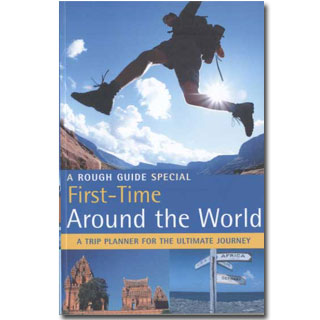
- colour photos (got to have those)
- regional profiles and maps - the maps even have overland travel times and prices for local transport so you can do a rough calculation of some costs
- weather charts for regions so you can try to hit the best weather or at least avoid the worst - we are simply aiming not to need heavy clothing for the whole year
- info on essential gear to bring and how to pack it
- tips on planning your itinerary - and warnings about the mistake of planning too much
- the usual stuff about health and safety, insurance, visas and vaccinations
- tips on finding work abroad and/or volunteer experiences
- interesting section on foreign toilets - good to be aware of these things, in order to prepare the children of course
- potential costs/ things to consider - although this is nearly impossible to figure out. Asking "what would it cost to travel the world for a year?" is pretty much like asking "how long is a piece of string?" It really depends on alot of variables such as your comfort level with basic accommodations, where you want to go, and what kind of activities you want to do.
But the book does do a good job of costing out each region of the world across three categories: lowest and roughest (i.e., staying in the cheapest dorm hostel or camping, nights on trains, that type of thing), middle (cheap but hopefully clean hotels - I think this will be our category), and upper (decent hotel, private rooms in hostels). Within those categories, you get a rough idea of what your daily costs might look like. Obviously, staying in a cheaper country (usually a developing country) can save you a ton of money on a long trip. Hence, we will park ourselves in South-East Asia for quite a while. At least, that is the plan at this point. If we do make it to Japan (could not choose a more expensive country if we tried - it is mainly because it is Mitchell's #1 choice of place to see and that has something to do with Pokemon and Nintendo we're pretty sure), it won't be for more than a week or two even though it would be fascinating place in which to spend a long, long time.
 lers. And the local people you'll mostly come in contact with are vendors, taxi drivers, guides and hotel clerks - people serving you. To make more genuine contacts takes some effort. Volunteering or working in a place is one of the best ways. But even if you're just looking to take a picture of someone, a thoughtful approach might lead to a more meaningful connection; see p. 208 for more advice."
 What else? There's a neat little chart found in Ch. 4 on "Costs and Savings". It's called the "Spendometer" and it judges how many days of travel you could accomplish with $1000. With $1000, you could last approximately 67 days on the road in India but only 14 in Japan. In France, it would apparently last you 20 days while you could live for 54 days in Bolivia. Australia is in the middle at 40 days. Lots of interesting little charts and calculations like this can be found in the book. As usual, though, very little about special considerations for families. I guess the people who write these travel books and guides don't think that we families get out much. Newsflash to the Rough Guides editors: you don't have to be a twenty-something, completely broke, unwashed hippie wannabe to enjoy seeing the world beyond Disney.
All in all, though, a very useful book. I will leave you with another funny travel quote I came across:
"I haven't been everywhere, but it's on my list."
Susan Sontag


